Choose your next adventure


How Good Is Your Memory?
How Good Is Your Memory?
PlayableSix word lists. Just your brain.
Based on the Deese–Roediger–McDermott (DRM) paradigm, developed by Deese (1959) and Roediger and McDermott (1995). More psychology games
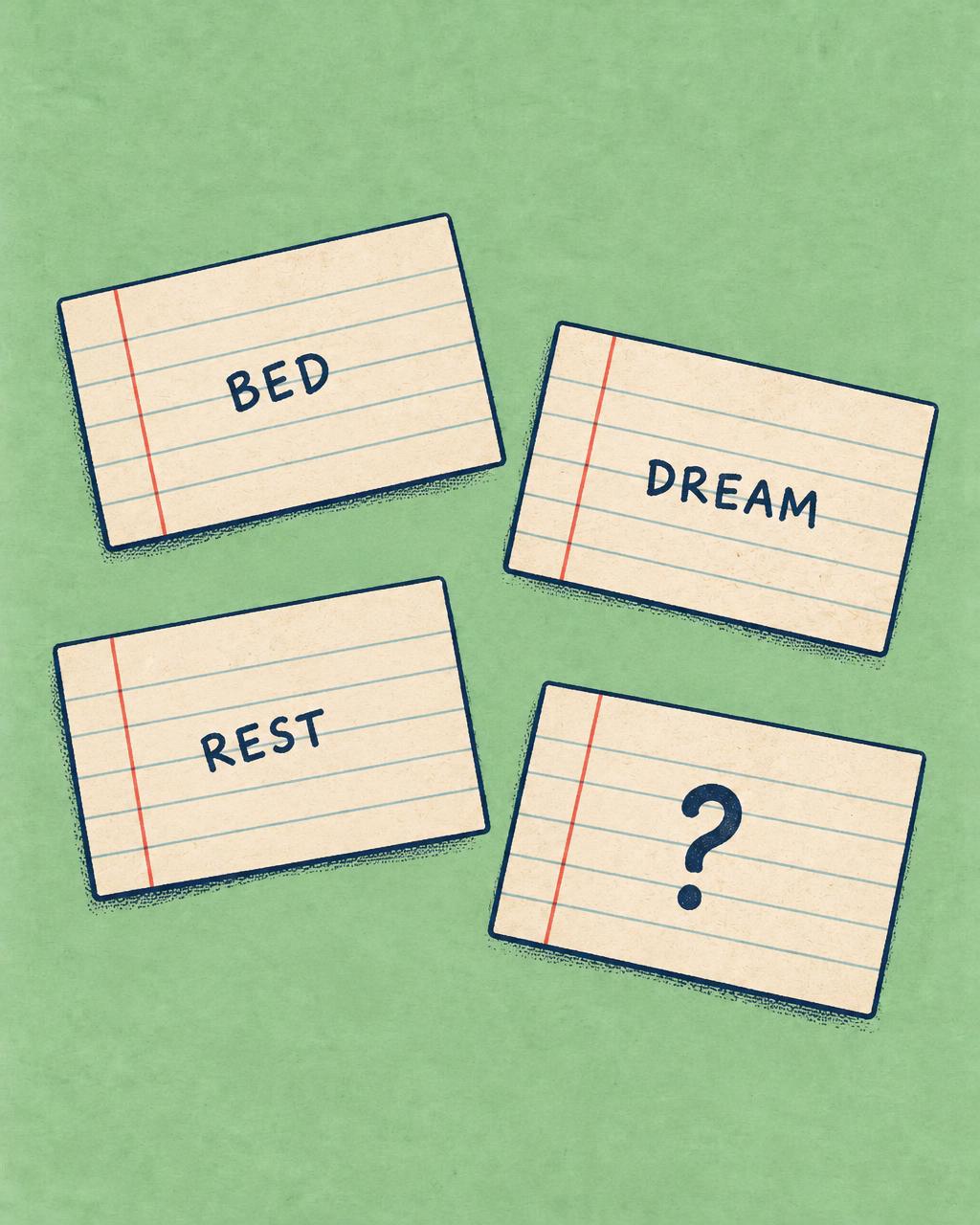
How Good Is Your Memory? is a short word memory test: watch six lists of words, then decide which words you saw and how certain you feel. Each round starts when you are ready, and the explanation comes after your final answer.
For the surprise, play before reading further. This free false memory test is an interactive demonstration of the Deese–Roediger–McDermott paradigm, often called the DRM paradigm or DRM procedure. It explores how remembering the meaning of a word list can differ from remembering its exact contents.
The demonstration includes four rounds with an unshown related word and two control rounds where that word really appears. Your result separates recognition of studied words, acceptance of unshown related words and confidence in those answers. This browser adaptation is not an exact replication of a published study.
For another perspective on attention and thinking, try the Selective Attention Test, Intuition Test or the experiments in Mind Lab.
How to play
Start the test, then press I'm ready to begin each of the six rounds.
Watch twelve words appear one at a time. Try to remember them without writing them down.
Rate each test word from Definitely not to Definitely, depending on whether you remember seeing it.
After the sixth round, review your result and the explanation, copy your result or play again.
What is the DRM paradigm?
The Deese–Roediger–McDermott paradigm studies false memories using lists of associated words. A related word, called a critical lure, can feel familiar even when it was never presented. Deese studied these word associations in 1959; Roediger and McDermott developed the well-known false-memory procedure in 1995.
The DRM effect shows a distinction between familiarity, confidence and accurate recognition. An error on this demonstration does not diagnose a memory problem, and avoiding the lure does not prove that someone is immune to false memories.
Using this demonstration in a classroom
Share the game before explaining the DRM effect if you want students to experience it without knowing the mechanism. Afterwards, discuss the difference between a word being related to a list and actually appearing on it, and whether confidence tracked accuracy. The two control rounds provide a useful contrast.
FAQ
What is this false memory test based on?
It is a browser adaptation of the Deese–Roediger–McDermott (DRM) paradigm, using related word lists and recognition ratings. It is an educational demonstration, not an exact research replication.
How long does the word memory test take?
There are six rounds with twelve study words and four recognition questions each. Allow roughly two to three minutes, depending on how quickly you answer.
Is this a clinical memory test?
No. It demonstrates a memory effect for curiosity and learning. It cannot diagnose memory loss, dementia or any other condition.
Can I use the DRM demonstration with students?
Yes. It is free, runs in a browser and needs no account. Let students play before discussing the mechanism if you want an unprimed demonstration.
An educational adaptation, not a clinical assessment or controlled research study. Prior knowledge, attention and familiarity with English words can affect your result.