
Psychology games online
Free little mind tests built on real psychology experiments. Make a choice, guess what everyone else did, then find out how predictable people really are.
Mind Lab
Are you like everyone else?
27 famous experiments from behavioural psychology and economics in one free browser game. Takes about 15–20 minutes, and your progress is saved.
Play Mind LabHow Bad Is It? A hypocrisy test
Rate 20 everyday wrongdoings and compare how you judge yourself and others. Inspired by moral hypocrisy research, this short game explores double standards without claiming to measure your character.
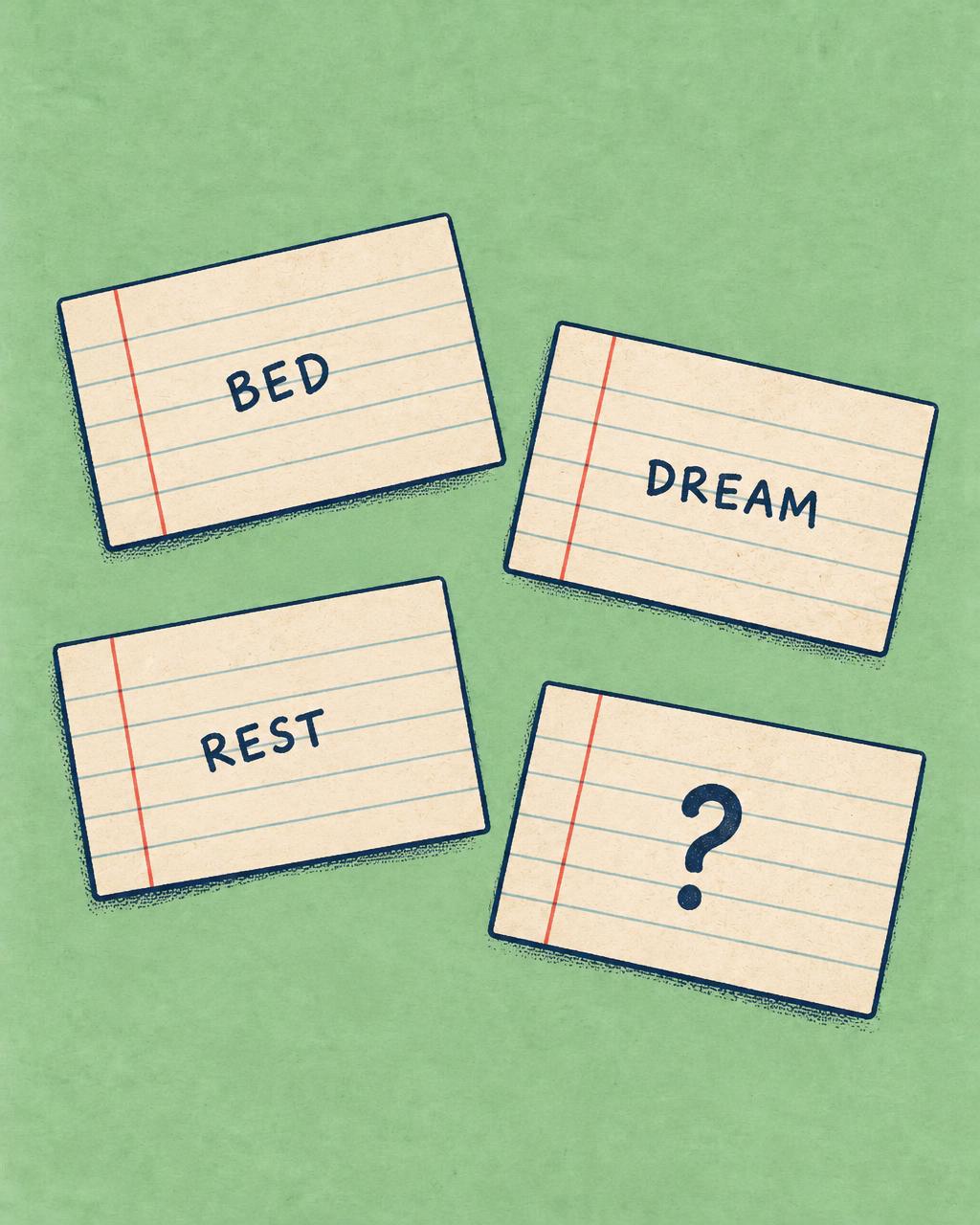
How Good Is Your Memory?
Six short word lists, four recognition questions per round and a confidence rating for each answer. Play first, then explore the Deese–Roediger–McDermott (DRM) paradigm behind this word memory test.
Gut Check: a cognitive bias quiz
Eight questions, two versions of each, and one hidden detail that can nudge a decision. This playful cognitive bias test explores anchoring, framing and default choices. Trust your gut, predict your score, then compare the question you saw with its twin. The score is for curiosity, not a diagnosis, and the comparison figures are built-in references.
Selective attention test
Count the passes made by the white team and ignore everything else. Inspired by the classic inattentional blindness experiment, it shows how much a focused mind can miss.

Change blindness test
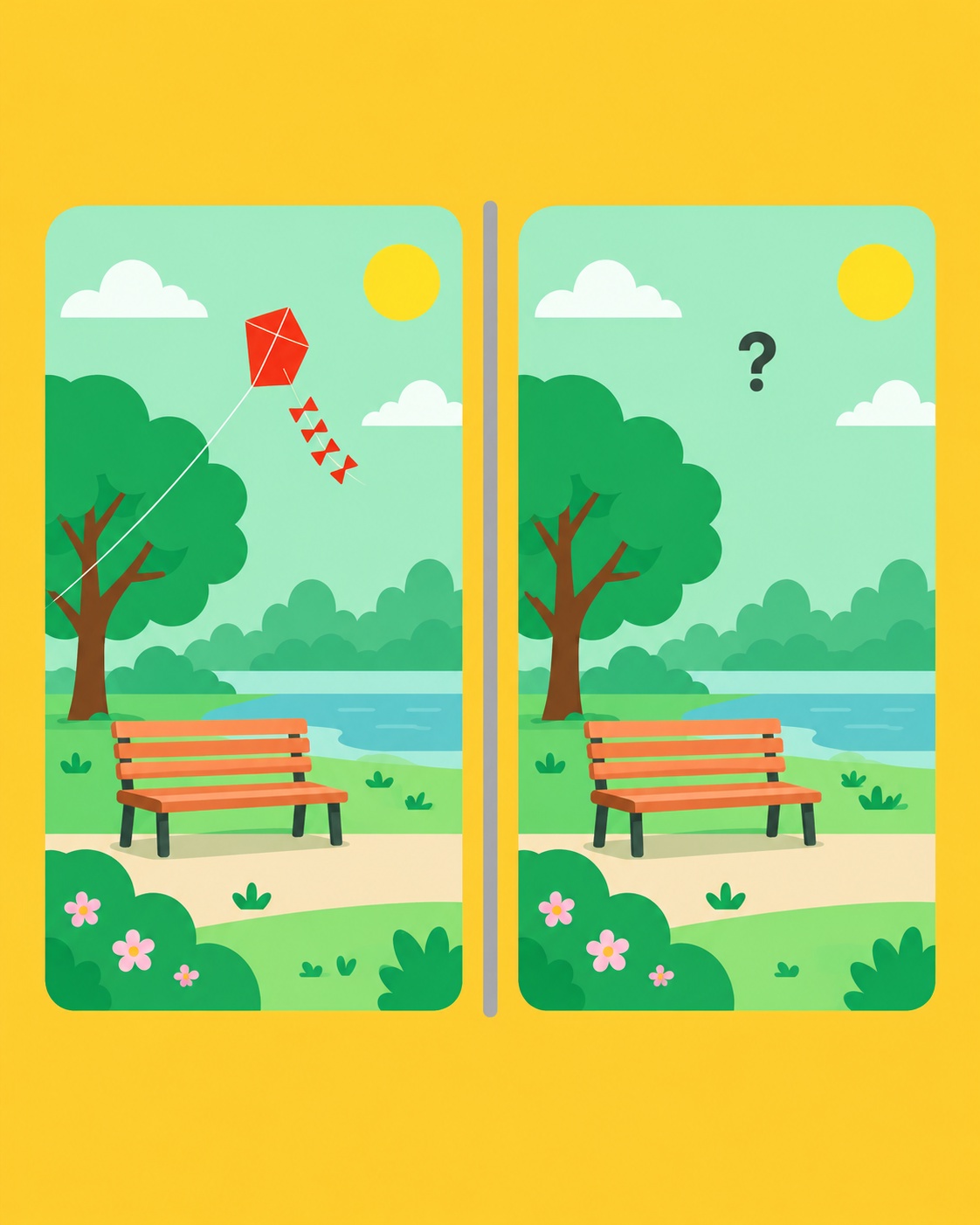
A photo flickers with an 80 ms gray blink between frames, and one big thing keeps changing. Built on the flicker paradigm from Rensink, O'Regan and Clark (1997), it shows how much your eyes miss while you are looking right at it.
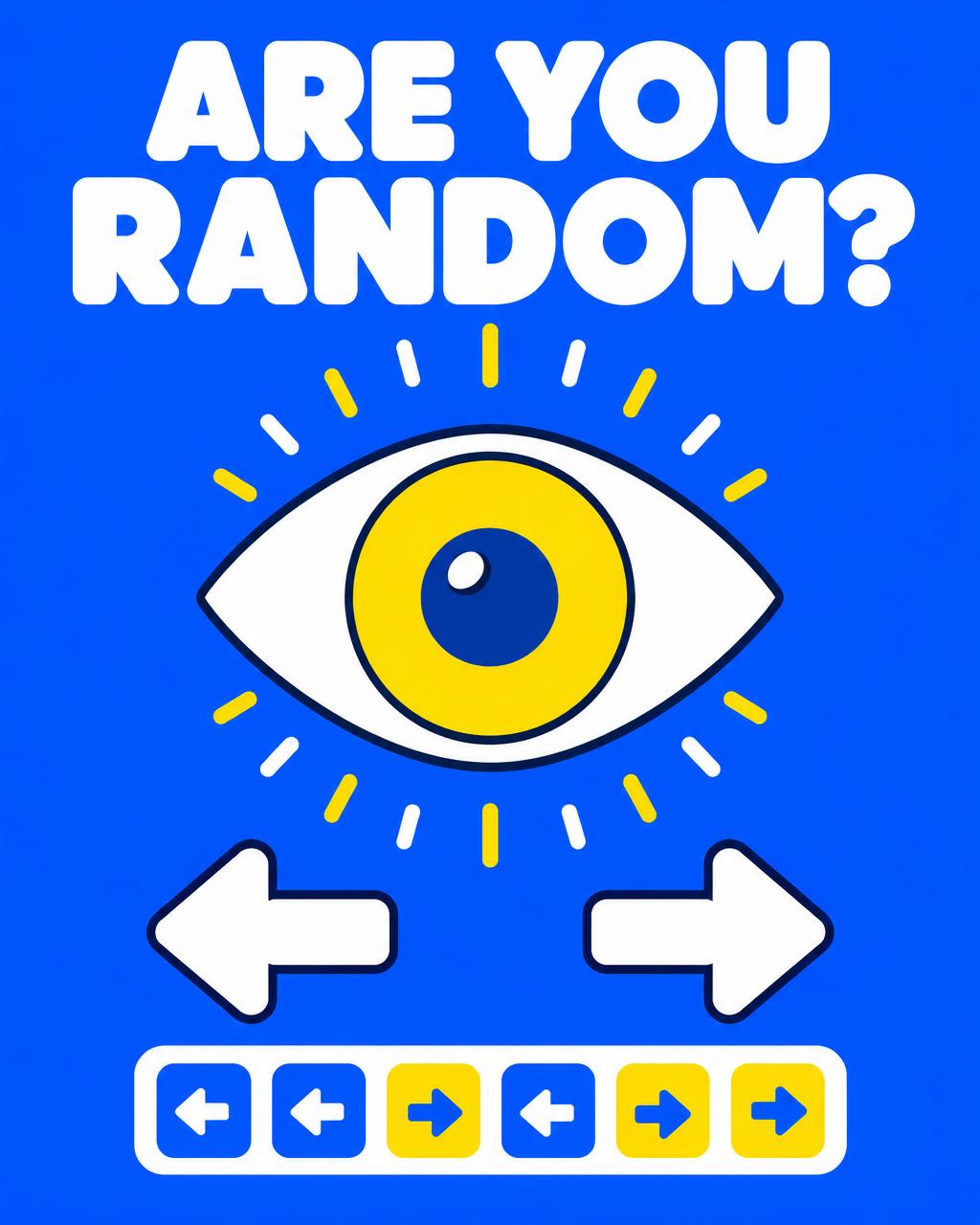
Can you be unpredictable?
Are You Random? gives you 100 left-or-right choices while a tiny machine learns your patterns. Try to keep its prediction accuracy below 50%. It is a playful experiment, not a psychological diagnosis.
Intuition Test: a cognitive reflection test
Between 12 and 15 timed questions, eight of them traps, where the first answer that pops into your head is the trap.
The Hurry: would you stop to help?
You are late for a talk and five people on the way need a moment of your time. Walk the route yourself and feel how hurry changes what you do. The result card compares your choices with the 1973 Good Samaritan study, where being in a hurry mattered more than any good intention.

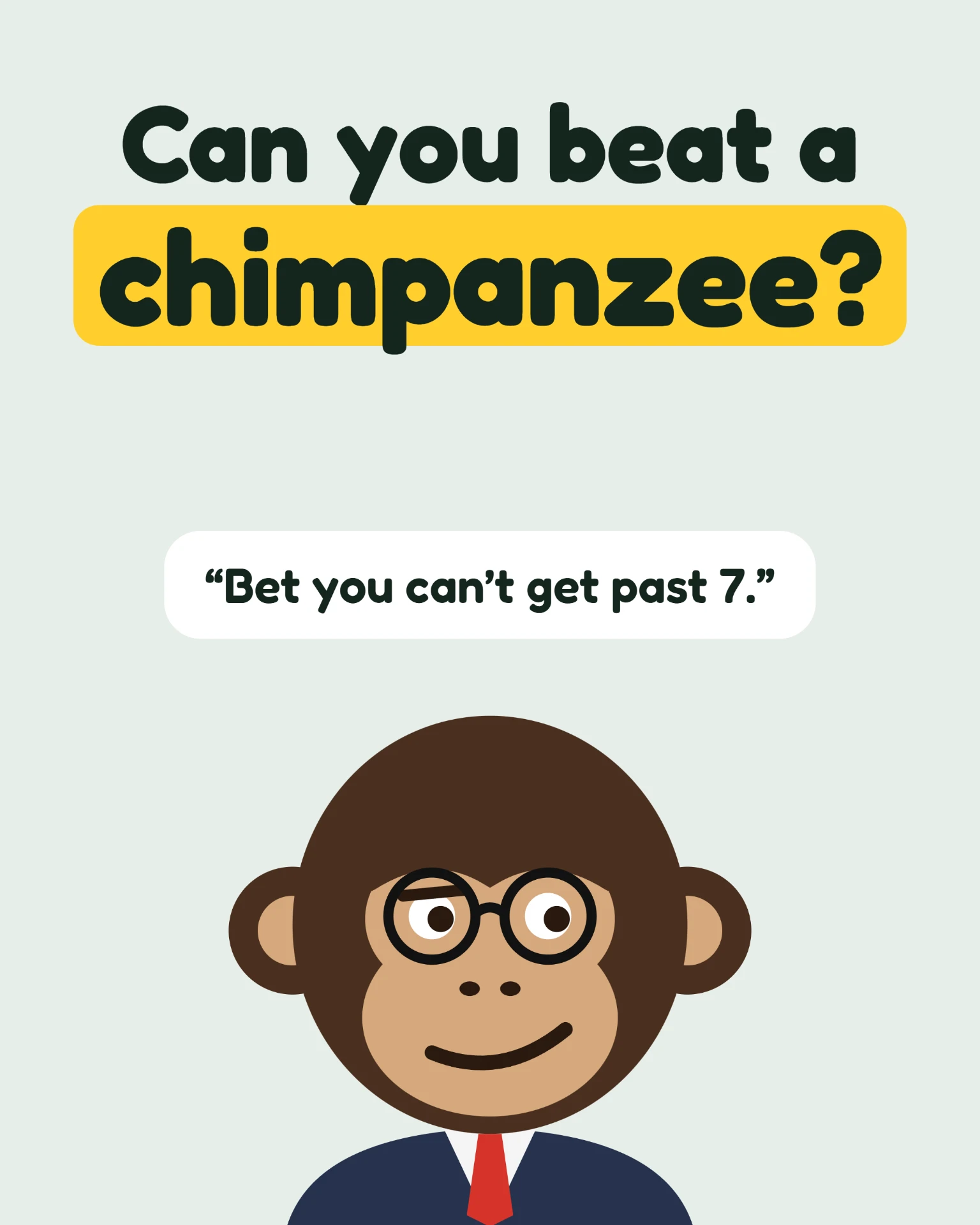
Chimp Test: a number-memory study
Memorize the numbered tiles, then tap them in order after they vanish. Inspired by the Ayumu number-memory studies, where chimpanzees beat humans at exactly this task.
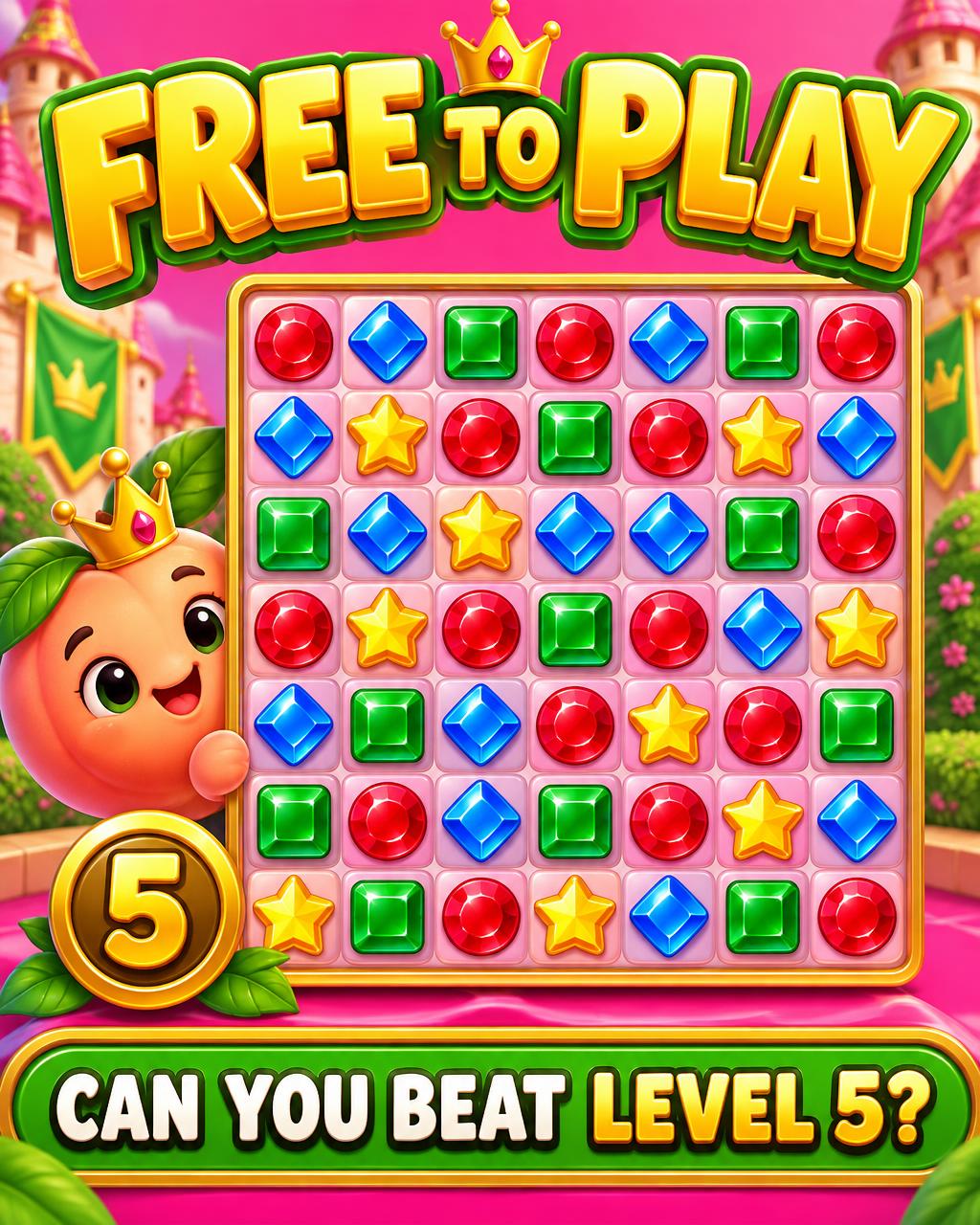
Free to Play: can you beat level 5?
Five minutes, five levels and a gem-matching challenge with something to reveal at the end. All purchases are simulated: no real money is charged.
Experiments you can try
The trolley problem
Would you pull the lever to save five people and sacrifice one?
The Monty Hall problem
Stick or switch? Most people get this one wrong.
Asch conformity test
Do you trust your eyes, or the crowd?
The Stroop effect
Name the colour, not the word. Harder than it sounds.
The ultimatum game
Would you turn down free money if the split felt unfair?
The bat and ball problem
A quick maths question that fools most clever people.
The Good Samaritan experiment
Would you stop for a stranger if you were already late?
Why play psychology games?
These studies changed how we understand decisions. They show how small things, like the wording of a question or what the people around you say, quietly steer your choices. Playing them is a fun way to catch your own brain in the act.
Questions
- What are psychology games?
- Psychology games turn real experiments about thinking and decision-making into something you can play. You make a choice, then learn what it says about how people think.
- Are these psychology games free?
- Yes. They run in your browser on PC and mobile, with no download and no sign-up.
- Are the experiments based on real studies?
- Yes. Mind Lab is built on published studies such as Asch (1951) and Tversky & Kahneman (1981). The source is shown after each experiment.
- Can I compare my answers with other people?
- Mind Lab lets you compare choices with recorded player answers. Gut Check instead shows built-in study-inspired comparisons between two question versions; these are not live player statistics.
- Is the cognitive bias quiz a psychological diagnosis?
- No. Gut Check illustrates how anchors, framing and default choices can influence decisions. Its score is not a clinical assessment, an IQ score or proof that a detail changed your answer.
Want more? Try our interactive learning games, sharpen your eyes with the observation games or see all puzzle games.