Choose your next adventure
Cut to the Atom
Cut to the Atom
PlayableKeep halving a strip of paper. How small can small get?
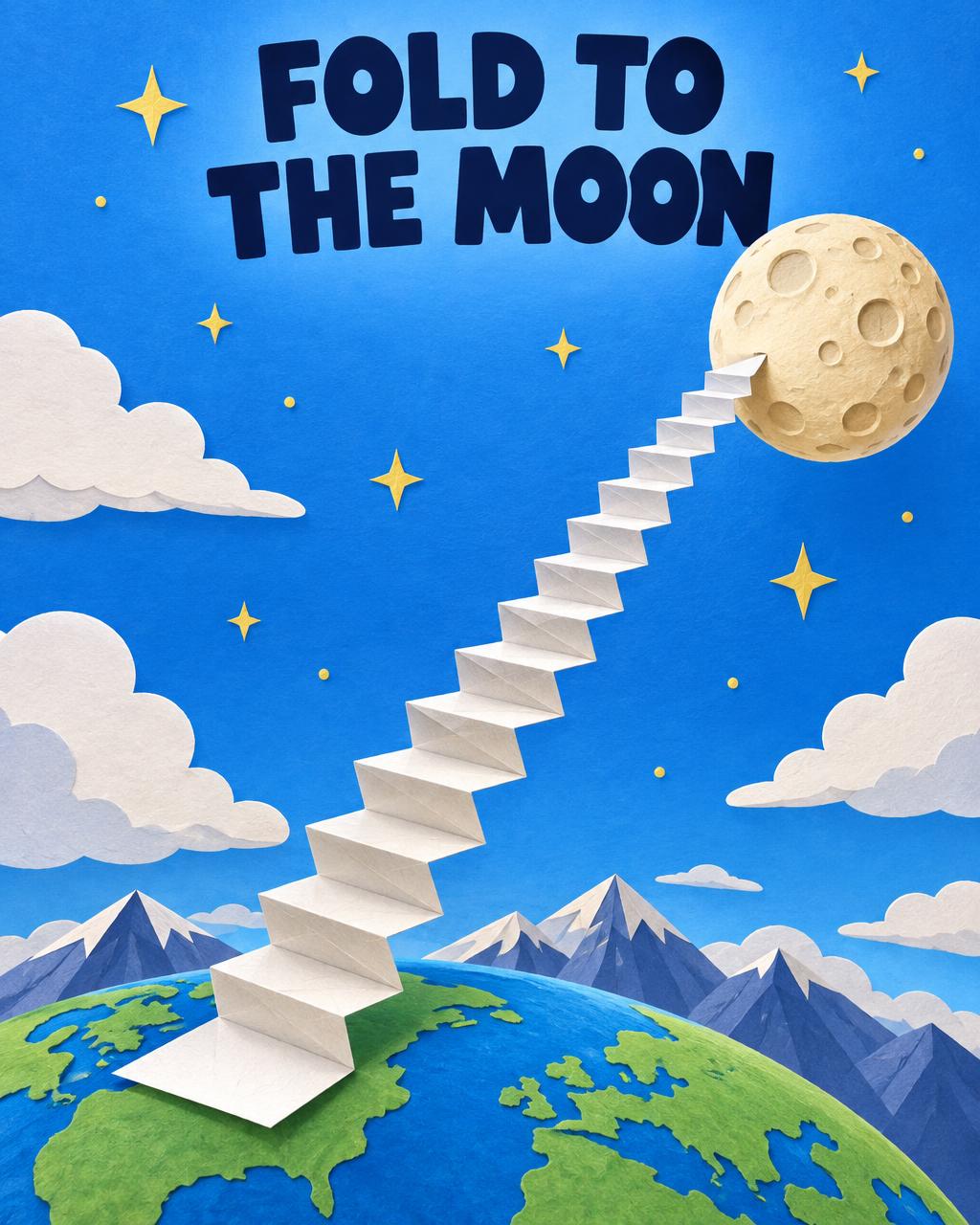
Cut to the Atom is a free interactive thought experiment about repeated halving. Start with a paper strip as long as an A4 sheet, guess how many cuts it will take to reach a single atom, then cut the remaining strip in half again and again.
The answer is 31 idealized cuts. Each one halves the length, while the world around the paper grows to keep it visible. A phone, a flea, a human hair, a red blood cell and a strand of DNA appear along the way, giving every jump a physical comparison. Your original guess stays on screen so you can see how your intuition held up.
Around 2,400 years ago, Democritus and Leucippus imagined dividing matter until reaching something that could not be cut any further. They called it atomos, meaning uncuttable. Modern atoms are divisible and do not have one simple hard edge, so this is a scale model rather than a literal picture of an atom.
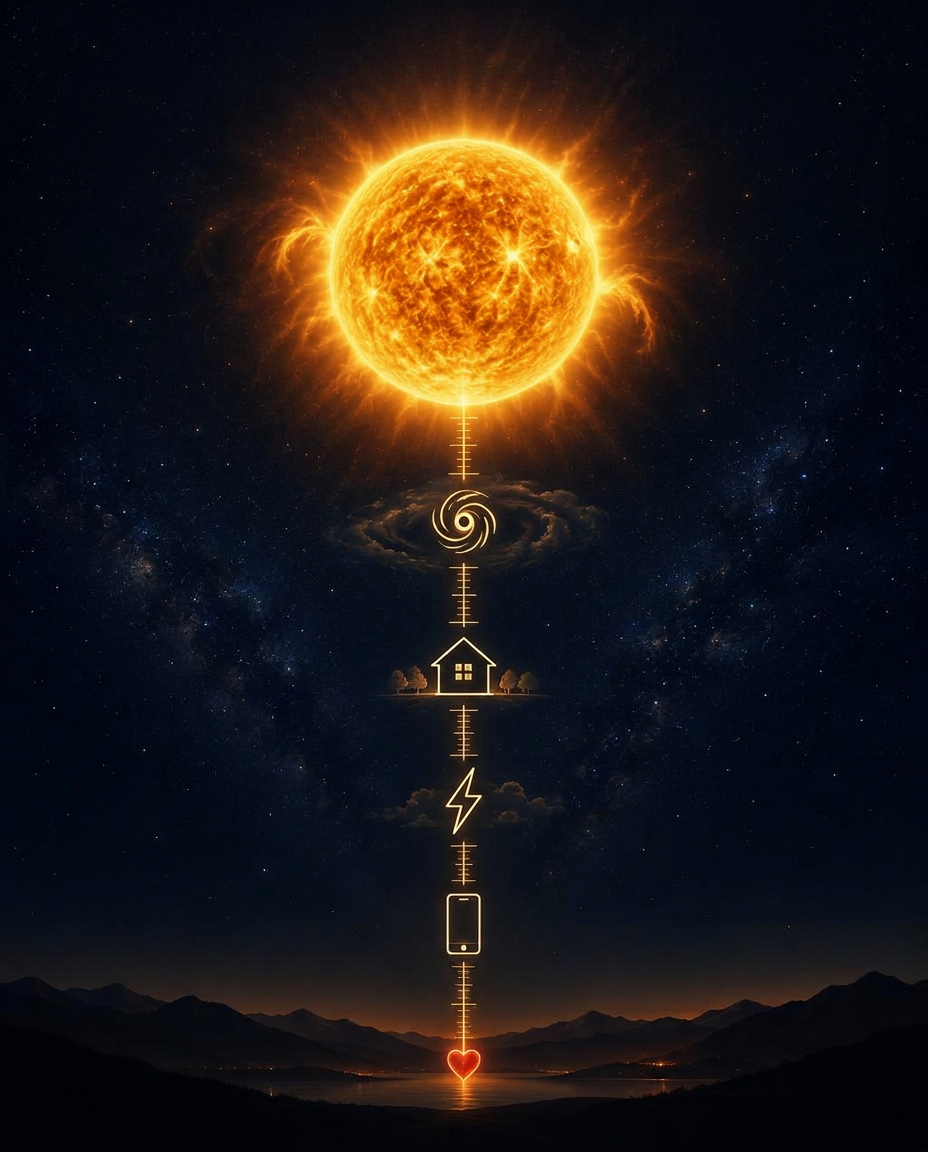
This is the reverse journey of Fold to the Moon: instead of doubling paper until it reaches space, you halve it until the familiar disappears. For another perspective on extreme scale, climb from a heartbeat to the Sun in Scale of Energy, or explore more interactive learning games for curious adults.
How to play
Choose 100, 1,000 or 10,000 cuts, or enter your own guess. Press Let's cut to begin with the whole A4-length strip.
Press cut, Space or Enter to halve the remaining strip. Watch the length, the fraction left and the comparison objects change after every cut. Tap an object to open a small fact about it.
At 31 cuts you reach the scale of a carbon atom and see how your guess compared. Zoom back out, start over, or keep cutting toward the nucleus, a proton and finally the Planck length at 114 cuts.
How many times can you cut paper in half?
In this mathematical thought experiment, 31 halvings take a 29.7 cm strip to approximately 1.38 × 10⁻¹⁰ metres, or 138 picometres. That is close to the approximate carbon-atom scale used by the game. The calculation is length after n cuts = 29.7 cm ÷ 2ⁿ.
Real scissors cannot follow the experiment all the way down. Paper fibers, the blade and eventually the rules of physics get in the way. The game keeps the same simple rule running so you can experience the part intuition usually misses: repeated halving becomes astonishing very quickly.
Democritus and the original thought experiment
The ancient Greek atomists Leucippus and Democritus proposed that matter could be divided only so far before reaching indivisible pieces. Their word atomos literally meant uncuttable. They were reasoning philosophically, not describing a paper-cutting demonstration or observing atoms through an instrument.
Modern science changed the picture: atoms contain nuclei and electrons, nuclei contain protons and neutrons, and protons and neutrons contain quarks. Cut to the Atom lets you continue beyond the classical atom to those smaller scales, ending at the Planck length as a speculative lower landmark rather than a proven smallest object.
A few landmarks on the way down
- 1 cut: about 14.9 cm — roughly the length of a phone.
- 7 cuts: about 2.3 mm — flea territory.
- 12 cuts: about 72.5 micrometres — around the width of a human hair.
- 15 cuts: about 9.1 micrometres — close to a red blood cell.
- 27 cuts: about 2.2 nanometres — around the width of DNA.
- 31 cuts: about 138 picometres — the approximate carbon-atom scale used here.
Why I created this
Fold to the Moon made exponential growth feel physical, and I wanted to travel in the opposite direction. There is something lovely about a pair of scissors and a plain strip of paper leading all the way back to Democritus. The first cuts feel almost pointless, then suddenly the entire visible world has slipped past you.
FAQ
How many times can you cut paper in half to reach an atom?
In the game's idealized calculation, 31 cuts take a 29.7 cm strip to about 138 picometres, close to its chosen carbon-atom scale. This is a mathematical thought experiment, not something real scissors can do.
Why does it take only 31 cuts?
Every cut halves the remaining length. Repeating that 31 times divides the starting length by 2³¹, or 2,147,483,648. Starting at 29.7 cm gives approximately 1.38 × 10⁻¹⁰ metres.
Who first imagined cutting matter down to atoms?
The idea is associated with the ancient Greek atomists Leucippus and Democritus, around 2,400 years ago. They reasoned that division would eventually reach uncuttable pieces called atomos. They did not perform this specific paper experiment.
Is an atom really the smallest thing you can reach?
No. Atoms contain smaller particles, and the game continues past the atom to a nucleus and a proton. Its final landmark is the Planck length, which is a scale where current physical theories break down, not a proven smallest piece of matter.
Is Cut to the Atom free and playable on mobile?
Yes. Play free in your browser without an account or download. Tap cut on a phone, or use the button, Space or Enter on desktop.
An idealized scale visualization, not a physically possible cutting simulation. Object and particle sizes are approximate; atoms do not have one simple hard boundary, and the Planck length is not a confirmed minimum object size.